Loading promotion info...
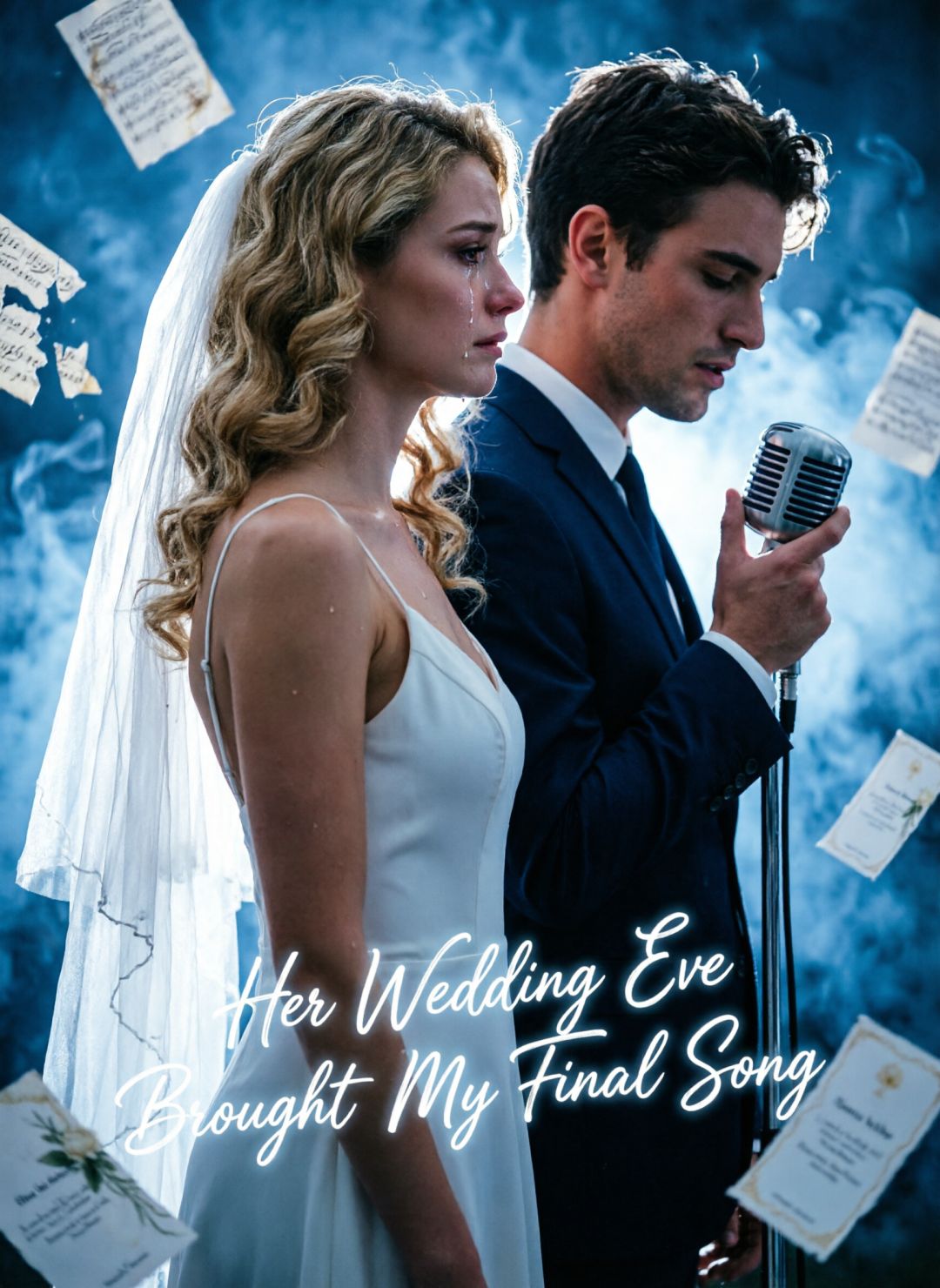
Her Wedding Eve Brought My Final Song
 NovelMaster
new
Completed
Four years ago, I was diagnosed with a malignant heart tumor. The doctor said that if I was lucky, I had a little under two years left. That same afternoon, Clay got the signed contract for his European tour. He burst into my hospital room holding the paper and said he could give the whole thing up and finish our album with me first. I looked at his fingers, raw from rehearsing all night, and said nothing about the diagnosis. His father Victor came by afterward with a breakup agreement. I signed it and told Clay I was done chasing dreams with him, that I wanted someone who could save me twenty years of struggle. He ran after me into the rain, crying, asking if I meant it. I hid in the stairwell and never took a step out. For the next four years he hated me for taking money and betraying him. Hated me enough that at his wedding rehearsal, in front of a live camera, he said he hoped I would disappear from his world forever. What he did not know was that every dollar of that money went to buying back the master tapes the label had locked away from him. He did not know that after his father blacklisted me I lost my work and my access to treatment. And he never knew that the last email I sent him shortly before I died was stopped by his fiancee Juliana herself. Not until my master tape arrived the night before his wedding. He heard me say, "Clay, I picked a road for you that didn't have me on it. That wasn't noble. It's the mistake I regret most." By then he had already verified the death certificate, the cremation number, and one last recording of my heartbeat. On Valentine's night, Clay turned his wedding rehearsal into a live broadcast. The gold emblem behind the stage belonged to Laurent Records. His new album sat beside the wedding invitations, and when the host reached the audience question segment, he deliberately picked the one guaranteed to get a reaction. "If Nora Reed walked in here tonight, would you invite her to the wedding?" The room went quiet for a beat, then burst out laughing. I stood at the edge of the stage and watched Clay's grip tighten on the microphone. He was the same as he had been four years ago. The more it hurt, the wider he smiled. "No." He glanced at Juliana in the front row. "She took my father's money, sold off the songs we wrote together, and never offered me any explanation. If she has the nerve to come back, security will walk her out." Applause broke out. I looked down at my own half-transparent hand. Three weeks dead, I had finally made it to the grandest farewell of his life, except the person he was saying goodbye to was not me. Messages were flying in the old classmates' group chat. Someone said I was probably out of my mind with regret by now. Someone else said a woman like me, hearing Clay was marrying the label's chief operating officer, wouldn't even dare open the invitation. My own profile picture stayed dark, naturally. Before the stream ended, a stagehand carried an old master tape case onto the stage. The corners were worn pale, and across the seal was my handwriting: For Clay Laurent only. "Who delivered this?" The smile faded off Clay's face. "A Mr. Owen Grant. He said he's the executor of Nora Reed's estate." Juliana was on her feet at once, signaling for the cameras to cut. But the stream had not gone fully dark yet, and a document had already turned up in the old group chat. Owen had written only this: "Nora died three weeks ago. Death registration attached. Stop making a joke of her." The chat went dead, like someone had pulled the plug. Clay stared at the screen for a few seconds, then let out a cold laugh. "Four years ago she used money to make me give up. Now she's using her death to make me forgive her. Her methods have improved, at least." Juliana reached for the tape case. "Hand it to PR. I'll find out who's manufacturing rumors right before our wedding." "It was left to me." Clay took the box back out of her hands. He moved too fast, and his nail dragged across the paper, leaving a thin scratch through my name. Owen was standing in the backstage doorway. He did not argue my case. His voice stayed level. "The file number can be verified through the state's vital-records office. As for the tape, whether you listen is your decision. Nora never asked you to forgive her." Nothing made Clay angrier than other people deciding for him. He turned and walked into the recording booth, and in front of Juliana and the PR manager, he loaded the tape into the player. The PR manager reminded him that even with the stream cut, there were still dozens of phones in the room. Clay locked the door and made everyone hand over their devices. Juliana insisted on staying, saying even the will could be part of an extortion scheme. "If Nora really wanted to reach you, she had four years of chances." Clay did not answer. He pulled a delivery confirmation from the bottom of the case, dated two months before the rehearsal. Which meant I had arranged the delivery date while I was still alive. I had not been chasing his wedding news to stage a scene. He asked Owen through the glass, "How many times did you see her before she died?" "Nine times, from when she signed the will until the cremation." "Did she ask about my wedding?" "She asked for the date. She wanted to be sure the tape would not arrive on the day itself." The answer did not make things easier for him. He would rather I had forced my way in out of spite than believe I had calculated even the hour my death would reach him. After a stretch of tape hiss, my voice came through. "Clay." Just his name, and his hand froze on the stop button. It was recorded seven days before I died. My breathing was already shallow. Every word needed a pause after it so I could pull in air. "If Owen got the dates right, this tape will reach you on the day of your rehearsal. Don't be afraid. I'm not here to stop a wedding." Clay slammed the player off. "Get it authenticated." He pushed the tape at the PR manager, his voice tight. "I want to know when this audio was cut together." But I saw him when he left the booth. He was holding that old box tight against his chest.Audio authentication would take time. Clay did not wait for the results. At one in the morning he drove alone to the old studio we used to rent. The red brick building had shut down, with a demolition notice taped to the door. Only Marta, the caretaker, still lived on the ground floor. Marta recognized him, and offered no hug and no comfort. She just took out a ring of keys. "Nora said if you ever came, I should let you look for yourself." The storage room next to the isolation booth swung open, and Clay stopped where he was. Inside there was a folding cot, an electric kettle, and pill boxes stacked against the wall. Overdue payment notices sat under the recording gear, and the latest one was for hospice care. There was no photo of me by the bed, only the poster from Clay's first tour, its back covered edge to edge with the hours I had logged restoring audio tracks. He bent down and picked up a bill, his eyes landing on the balance. "Didn't she take two million dollars?" "She took it." Marta opened an old computer. "But it sat in her account less than an hour before it went into an independent rights trust. She never drew a cent out of it in all these years." Clay kept turning pages. Every click landed harder than the last, as if moving fast enough would shake loose some proof in the ledger that I had spent it, betrayed him, or at the very least lived decently. She found nothing. For as long as I could still work after I got sick, I made a living fixing audio for small bands. Later my hands shook too much to hold a mouse, and Marta let me move into the storage room, so I watched the equipment for her at night. Clay opened the first track on the master tape. The rain came out first, from four years ago, and then his voice, young and shaking. "Nora, we've finished recording all eleven songs. If you're telling me now that you don't love me, then what was that album?" "A bad investment." That day I had written every line out on paper beforehand, to make sure I would not go soft. On the recording Clay was crying. "I can spend less. I don't have to go to Europe. Just don't take my father's money, please?" "I already signed." My voice stayed perfectly flat. "Clay, I'm done chasing dreams with you. What I want is someone who can save me twenty years of struggle." The recording cut off there. Clay took off the headphones. His face was whiter than the old acoustic foam on the wall. "Why would she leave that in? So I can hear one more time how stupid I was?" Marta looked at him. "There are four more minutes of the full recording. Nora cut it back then. What you're holding is the original master." Clay put the headphones back on. After the sound of the door closing, the me on the recording threw up in an empty room. Then came the rattle of a pill bottle rolling away and the sound of my breathing spiraling out of control. A long time passed before I made a call. "Owen, he's gone. Send the tour contract through. Don't let him find out I'm sick." Clay tore the headphones off. He looked around at the pill boxes filling the room, and for the first time he did not curse me. "Sick with what?" Marta shook her head. "Nora wouldn't let any of us answer that question for her." Clay searched the storage room top to bottom. I had stripped the labels off the pill boxes, and the medical records on the computer were password locked. All he found was a tour postcard that had never been mailed. The front was the Paris opera house. On the back was a single note: "The second row monitor was off tonight. You kept touching your left ear all the way through the third song." That was his first European tour. He had never said anything publicly about the in-ear monitor failure, which meant I had watched the whole stream and still knew every small habit he had. "Does she hate me?" he asked suddenly. Marta set the hot water down. "Every time she restored one of your old recordings, she turned the speakers down first. She said you didn't like people hearing you go off pitch when you were in your teens." Clay stopped trying my birthday and typed in the date of his first stage performance. The password was right. There were no love letters on the drive, only hundreds of project files. Every one of them was tagged with restoration progress, rights ownership, and delivery terms. The earliest batch belonged to him. After that came many young musicians who had never met him. In the years after I got sick, I was not lying in the dark waiting for him to come back. I was using what time I had to sort out other people's voices before someone else could bury them. Clay copied the directory to Owen. "Seal all of it. Until the licensing is verified, nobody touches anything." It was the first decision he made after learning I was dead. Not forgiveness. Protection of what I had left behind.After sunrise, Juliana called seventeen times in a row. When Clay got back to the company, the rehearsal stage was still standing. The band was running a new song, and at the first chord he stopped dead in the doorway. It was Before the Lighthouse Goes Dark. The year we were twenty-two, we wrote the opening on a beach in Seattle. Clay thought the chorus was too sad, and I promised to finish rewriting it when we got married. The melody had never been released. The only draft was in our old project files. "Stop." Clay walked up to the conductor's stand. "Who gave you this score?" Juliana pulled him aside. "It's the wedding single. Legal already confirmed the license. We have to finish tracking it today." "Nora wrote it." "The copyright belongs to the company." She handed him a contract. Two years ago, as my condition worsened, I had sold the company a temporary commercial license on part of my catalog to cover nursing costs. But the addendum said it plainly: Before the Lighthouse Goes Dark could not be released without my final written consent. Clay turned to the last page. "Where's her consent form?" Juliana was silent for half a second. "We never received any revocation." Owen came through the door right then with a lawyer. He set a server delivery receipt on the table. "Three weeks ago, Nora sent a final email revoking every license on this song. Eleven minutes after it entered the company system, an account assigned to the chief operating officer's office filed it under invalid correspondence." Juliana's face darkened. "An email from a patient whose identity can't be confirmed. Legal has every right to freeze it." "You knew it was her." Clay stared at her. "I knew somebody wanted to cause trouble before our wedding." I never asked in that email to see him. I wrote only this: this song is not finished, and it does not belong to anyone's wedding. Please stop using it. Juliana still chose to delete it for him. She reached to take the contract back. Clay moved it out of range. "Where is Nora now?" Owen gave the name of the hospice center. Clay turned on his heel. Juliana caught up with him at the elevator and raised her voice for the first time. "You've already seen the death certificate. What are you going to look for now? A body?" He held the elevator door and answered slowly. "I'm going to look for a woman you people can't file under invalid correspondence." On the way down, Clay called the state's vital-records office to verify the death registration. He read the number wrong twice, and finally handed the phone to Owen. "The center is closed. We can book a visit tomorrow," Owen said. "She's been dead three weeks." He watched the floor numbers. "I'm already three weeks late. I'm not waiting one more night." Halfway there, Juliana called again to remind him the board met in the morning, and if he missed it the budget for his new album would be frozen. "Freeze it." "Do you know how many people this will affect?" "Stop the rehearsal budget first, pay the band and the crew. We'll deal with the rest tomorrow." He was not running back toward the past without paying a price. Every step cost him a wedding about to happen, a business plan, and his father's support. But this time he did not let anyone use consequences to make the decision for him.The hospice center was on the north side of the city, a white building with a rose garden behind it that had nothing in bloom. The nurse on duty checked Clay's ID, offered no sentimental stories, and simply laid out the files one by one in front of him. Admission date, diagnosis, resuscitation preferences, transfer of remains, cremation authorization. My cause of death was written out clearly: advanced cardiac angiosarcoma, multiple organ failure. The time of death was 4:17 a.m. on January 24. That morning, Clay had given an interview to a wedding magazine. The reporter asked what he still wished for his ex. He smiled and said, "I hope she disappears from my world forever." He clearly remembered saying it. His fingers stayed on the paper a long time. "Can a cremation number be faked?" The nurse did not take offense. She pulled up the transfer photos in the system. "You can verify separately with the funeral home, the state, and the probate court. Mr. Grant was present and signed. We also kept Ms. Reed's last recording device." She took Clay to the room I had lived in. The old tape machine by the window still had the monitor leads taped to it. The last time I was fully awake, I asked the nurse to record my heartbeat into it. Not so Clay could listen to me die over and over. Only because Before the Lighthouse Goes Dark was short one beat, and I had once joked that I would fill it in with my own pulse. Clay pressed play. The first heartbeats were slow and uneven, with a nurse's voice asking something in the middle. In the last dozen seconds the sound drifted further and further away, until there was nothing but the machine holding one long tone. He threw the recorder onto the bed. "That's enough." But there was no one in the room making him keep listening. Clay stood holding the windowsill for a long time, then took the master tape out of his bag. At the start of the second track, I coughed for half a minute before I could steady my voice. "Clay, by the time you hear this, I'm already dead." His shoulders jerked hard. "Don't forgive me yet, and don't punish yourself either. Four years ago, I decided to lie to you. You have every right to hate me. "But please listen to the rest of the recording. It isn't only about the two of us." Clay sat down on the bed where I had slept and covered his face with both hands. This time he did not ask again whether I had faked my death. Because every possibility that I was still alive had already been checked off by him, one by one. The nurse handed him a sealed bag with my watch, my work badge, and a locker key inside. "Ms. Reed kept refusing to contact any family," the nurse said. "But every time somebody turned on the television she would ask whether you were on tour. On her last day she had me confirm that the tape would not arrive at the wedding. She said news of her death shouldn't become a way to humiliate you in public." Clay closed his hand around the key. "Was she in pain at the end?" The nurse did not offer him a kind lie. "Yes. It was better once she was sedated. Mr. Grant was beside her. She wasn't alone." He listened to every word of it and never again let anyone substitute "She was at peace" for the truth. The locker held only a cardboard box, with work notes, nursing bills, and a seating chart for the community theater. Row seven, seat seven was circled in red. That was where he had sat for our first show. At the bottom of the box was the instruction I had written for Owen: If he doesn't listen to the tape, carry out every instruction as planned. Don't go to him again. Clay said quietly, "She even arranged for my right to refuse." Owen answered, "That was the last time she tried to leave the choice with you."